
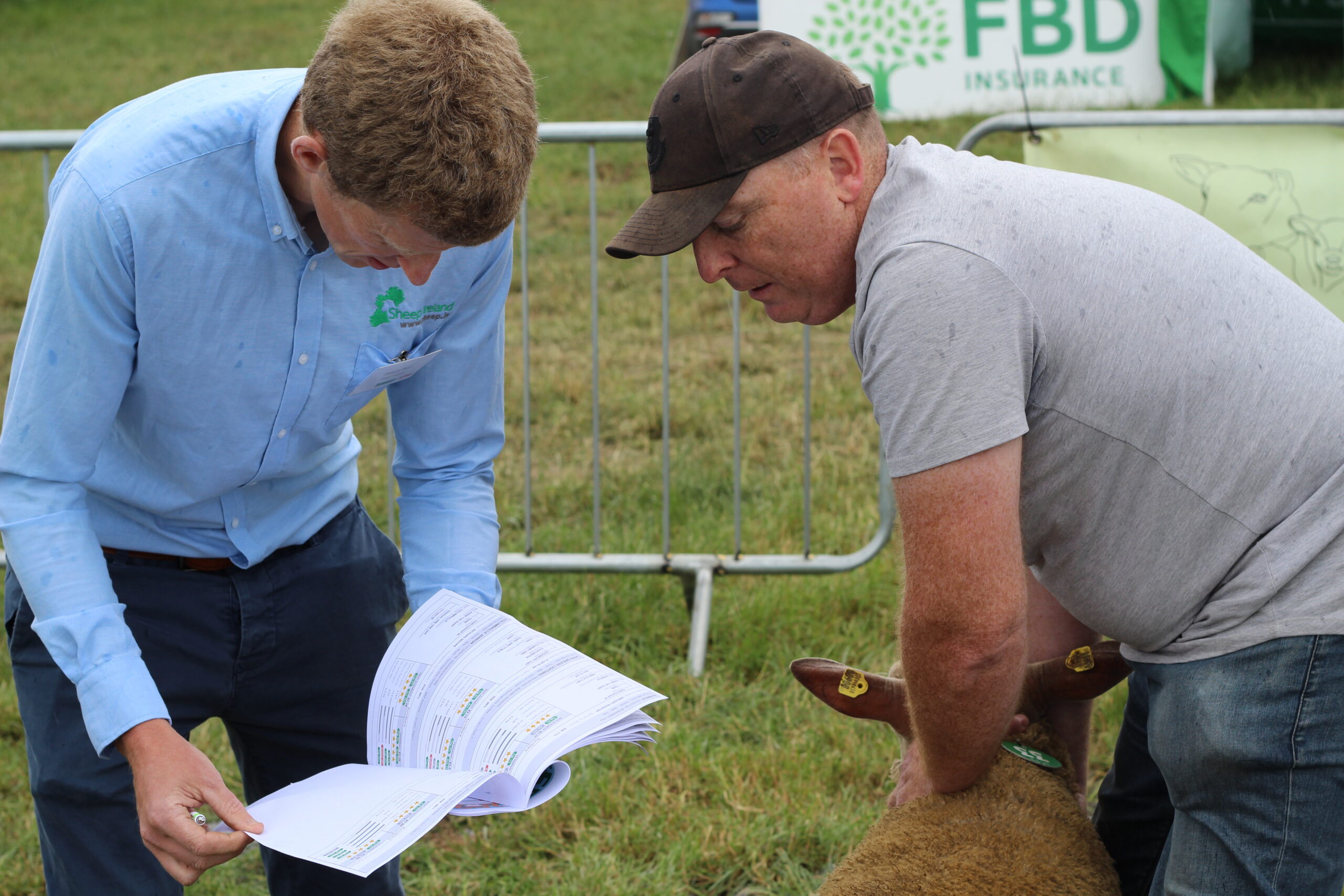
The genomic evaluation runs weekly, so there is potential for index movements due to new data flowing into the evaluation.
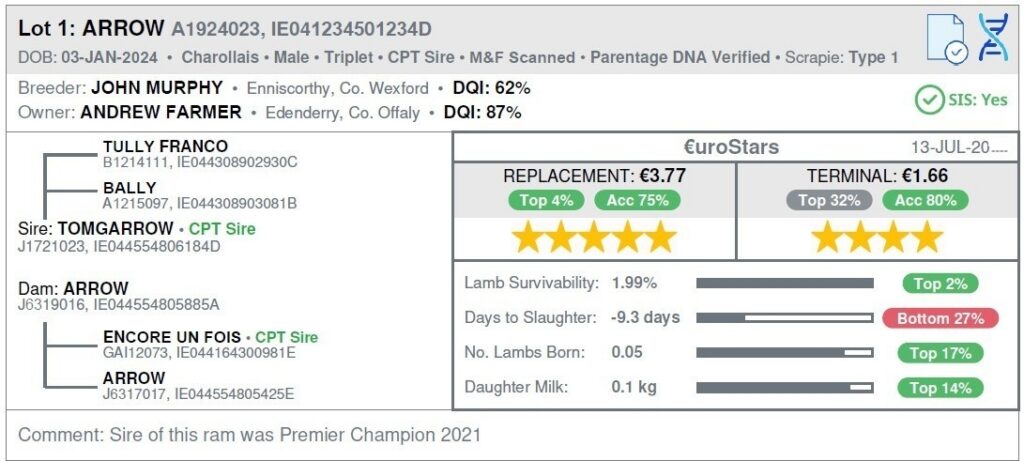
The €urostars are based on the most recent data available before each week’s genetic evaluation. The date of the latest published €urostars will be indicated in the top right-hand side of the sales card in catalogues and on the ram search.
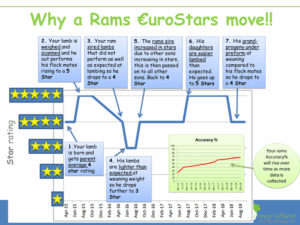
Changes in €urostar ratings:
As new information becomes available, this will be reflected in the animals €uroStars. This could mean the animals €uroStars increasing or decreasing, depending on the new data. Using high accuracy % rams will minimize evaluation movements.
Where breeders input a large volume of data at one time ie. 40-day and 100-day weights all at the same time, this will cause a surge of information flowing into that animal’s genetic evaluation which can result in movements in €urostars. Where animals have a low accuracy %, again these €urostars will be more likely to fluctuate as more data is recorded on that bloodline in the future.
Genotyping provides more accurate estimates of breeding values and indexes. Without genotyping, evaluations estimates that an animal gets 50% of its DNA of its dam and 50% from its sire, but not knowing which genes the animal had inherited. With genomic information we can look at the genetic makeup of the animal, determine which genes are inherited, and also look at how related this animal is to others. This new information in an evaluation might affect the ranking of an animal. Also, DNA testing may confirm or alter an animal’s recorded sire or dam, affecting its genetic evaluation.
This increased accuracy helps breeders make more informed decisions about which animals to use for breeding, leading to faster genetic progress within the flock, as increases the index accuracy on the replacement and terminal index.
Also, an animal star rating can change when its progeny weights are recorded, or daughters performance data becomes available. A change in €uroStars is a sign that the evaluation is becoming more accurate as more information is collected.
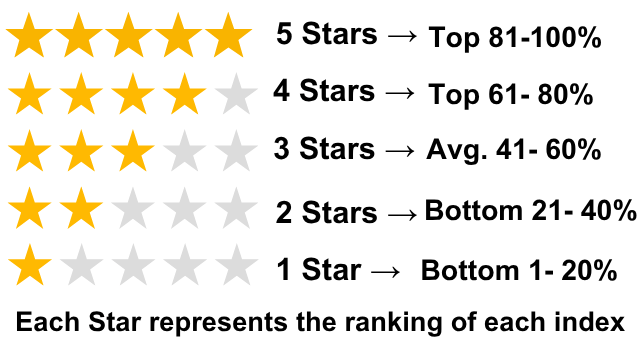
The star rating system (€urostar 1-5 stars) was incorporated into the Eurostar Index to make it easier for farmers to interpret; 5 stars being very good, 1 star being poor, ranking each index and traits in 20% groupings.
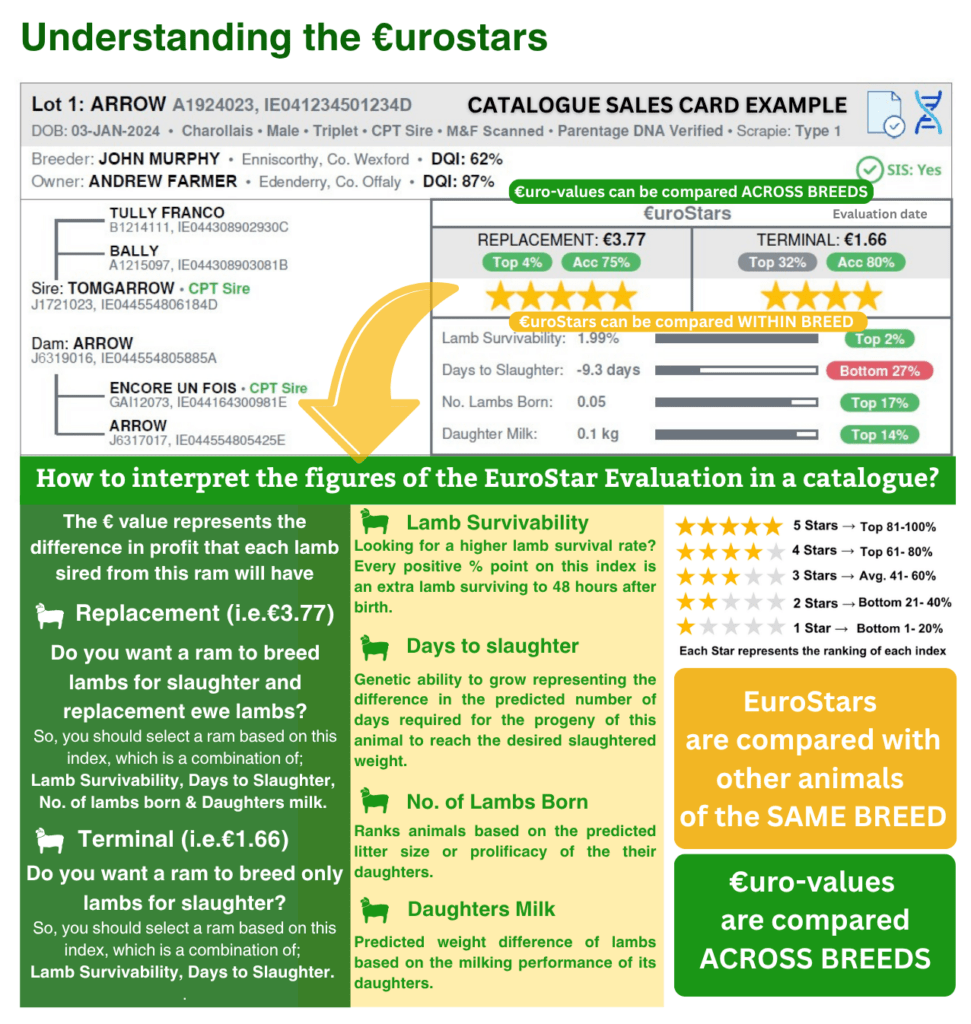
The DQI helps to minimize the significant fluctuations in the €urostars. The DQI encourages farmers to input data in a timely manner to reduce sudden fluctuations occurring in the €urostars.